I'm pretty sure my brain is typical at this point, halfway through paramedic didactic.
My mind is blank.
I make out flash cards, read, read, and read some more. Attempt to put it all together in the empty hole behind my eyes. Nothing.
It has to get better than this, right?
Truth

Bleeding
Wednesday, February 6, 2013

Friday, February 1, 2013
Currently Reading...
For 'medic coursework we are reading from most all our books:
Paramedic Practice Today, Volume 1 and 2 Rev. Reprint
Author Aehlert, Barbara J Edition 2011 ISBN 978-0-323-08539-
Pharmacology for the Prehospital Professional - With Dvd
Author Guy, Jeffrey S. Edition REV 11 ISBN 978-0-323-08519-9
12-Lead ECG in Acute - Text and Pocket Ref.
Author Phalen, Tim Edition 3RD 11 ISBN 978-0-323-07785-9
ACLS Quick Review Study Guide
Author Aehlert, Barbara Edition 4TH 12 ISBN 978-0-323-08449-9
For fun?
I managed to make it through The Zanzibar Chest by Aidan Hartley - a bit tough through the middle, but a ton of background on East Africa interwoven with a coming-of-age and history of his family. Worth my time and tugging me back to the Tanzanian higlands.
I also bought the eBook Wading Into Chaos: Inside the Life Of A Paramedic [Kindle Edition]. About 3/4 of the way through and it's been an interesting look inside the career of someone with boundless energy. Makes me feel like a slacker.
I've also been reading some poetry - Robert Browning, Robert Frost, and a host of English poets. Just like old friends - always there when you need them.
I've taken a bit of a break from The Dark Tower...I need to be in the right mood to take on Wolves of the Calla.
That's enough for now - focusing on getting through A&P and Cardiology with a little time left to ski!
Paramedic Practice Today, Volume 1 and 2 Rev. Reprint
Author Aehlert, Barbara J Edition 2011 ISBN 978-0-323-08539-
Pharmacology for the Prehospital Professional - With Dvd
Author Guy, Jeffrey S. Edition REV 11 ISBN 978-0-323-08519-9
12-Lead ECG in Acute - Text and Pocket Ref.
Author Phalen, Tim Edition 3RD 11 ISBN 978-0-323-07785-9
ACLS Quick Review Study Guide
Author Aehlert, Barbara Edition 4TH 12 ISBN 978-0-323-08449-9
For fun?
I managed to make it through The Zanzibar Chest by Aidan Hartley - a bit tough through the middle, but a ton of background on East Africa interwoven with a coming-of-age and history of his family. Worth my time and tugging me back to the Tanzanian higlands.
I also bought the eBook Wading Into Chaos: Inside the Life Of A Paramedic [Kindle Edition]. About 3/4 of the way through and it's been an interesting look inside the career of someone with boundless energy. Makes me feel like a slacker.
I've also been reading some poetry - Robert Browning, Robert Frost, and a host of English poets. Just like old friends - always there when you need them.
I've taken a bit of a break from The Dark Tower...I need to be in the right mood to take on Wolves of the Calla.
That's enough for now - focusing on getting through A&P and Cardiology with a little time left to ski!
Wednesday, January 30, 2013
Long-overdue update
Well, as I've said before, I really need to make more time to write. Just seems that between work, paramedic school, helping with EMT class, and travel, my blogging fell off the desk.
It's been a rough few months. I lost my beloved grandfather and a good friend. Both died fairly healthy, both at home, and didn't deal with lingering debilitating health issues. How they would have wanted, I think. I miss them dearly.
I somehow thought the holidays would be a great time to catch up on course work - ha! Aside from my paramedic courses, I'm supposed to be working through this self-paced A&P class. Well, I did crack the book and make it to Chapter 3 (of 24) before getting a not-so-gentle reminder from my medic school that they need the transcripts from my A&P class. Gulp. I dusted off the book and made myself a study plan. Hope to be done by the end of February.
In 'medic school we have survived 4 months of class (wow - it's really gone fast!)
Just to refresh, here's the total schedule:
 We have made it through the intro, pharmacology, and airway - just started cardiology last week.
Cardiology is the big hurdle...though I feel like I'm forever behind in all things.
We have made it through the intro, pharmacology, and airway - just started cardiology last week.
Cardiology is the big hurdle...though I feel like I'm forever behind in all things.
Practicing my intubation, IV starts, and med administration on our manequins here. Though I was told not to practice until we get to skills boot camp in August (really?). I need to get hands-on with the equipment and I've got Mr. Medic showing me the ropes. We have a ton of expired meds and IV fluid so I get to practice a ton. Need to play with the IO drill as well...
So much to do! Will write more soon, promise!
It's been a rough few months. I lost my beloved grandfather and a good friend. Both died fairly healthy, both at home, and didn't deal with lingering debilitating health issues. How they would have wanted, I think. I miss them dearly.
I somehow thought the holidays would be a great time to catch up on course work - ha! Aside from my paramedic courses, I'm supposed to be working through this self-paced A&P class. Well, I did crack the book and make it to Chapter 3 (of 24) before getting a not-so-gentle reminder from my medic school that they need the transcripts from my A&P class. Gulp. I dusted off the book and made myself a study plan. Hope to be done by the end of February.
In 'medic school we have survived 4 months of class (wow - it's really gone fast!)
Just to refresh, here's the total schedule:

Practicing my intubation, IV starts, and med administration on our manequins here. Though I was told not to practice until we get to skills boot camp in August (really?). I need to get hands-on with the equipment and I've got Mr. Medic showing me the ropes. We have a ton of expired meds and IV fluid so I get to practice a ton. Need to play with the IO drill as well...
So much to do! Will write more soon, promise!
Friday, December 28, 2012
In charge
So my mediocre life as an EMT has included a handful of calls where I acted as the "in charge" person - all BLS calls, all leading EMT's and First Responders.
All of that has begun to change. Mr. Medic is throwing me at patients. And I'm failing.
He served an apprenticeship under his mentor in a large city system. Even after his stint in paramedic school, I think they made their medics ride with a preceptor for another year. That was standard for their system at that time.
We don't have anything nearly as official in place here, but Mr. Medic seems intent on grooming me for my new role as paramedic. In a year's time I will be expected to take care of people and it's time to step up my game.
Haven't killed anyone yet, but focusing on the fact that the guy has a 20+ year history of migraines and neglecting to check for stroke...oops. Talking insanely loud because you are nervous...oops. Spiking an IV slow as molasses... Seems like every call I go on I forget things. Just taking a good history (at which I thought I was decent) has turned into a bit of a nightmare.
I have a good rapport with Mr. Medic but I don't want to disappoint. I want to be perfect.
All of that has begun to change. Mr. Medic is throwing me at patients. And I'm failing.
He served an apprenticeship under his mentor in a large city system. Even after his stint in paramedic school, I think they made their medics ride with a preceptor for another year. That was standard for their system at that time.
We don't have anything nearly as official in place here, but Mr. Medic seems intent on grooming me for my new role as paramedic. In a year's time I will be expected to take care of people and it's time to step up my game.
Haven't killed anyone yet, but focusing on the fact that the guy has a 20+ year history of migraines and neglecting to check for stroke...oops. Talking insanely loud because you are nervous...oops. Spiking an IV slow as molasses... Seems like every call I go on I forget things. Just taking a good history (at which I thought I was decent) has turned into a bit of a nightmare.
I have a good rapport with Mr. Medic but I don't want to disappoint. I want to be perfect.
Wednesday, December 19, 2012
The Real Problem I'm not hearing about
Folks, I'm going to piss you all off.
SHUT UP ABOUT THE GUNS
The guns are easy to latch on to, and everyone has their opinion. I'm staying silent on that one.
Can we please have a discussion about mental health now?
Can we PLEASE have a discussion about mental health now?
CAN WE PLEASE HAVE A DISCUSSION ABOUT MENTAL HEALTH NOW?
The mental health "system" in the U.S. is dismal. I put system in quotes for a reason. There is no system.
Where do we take people who have mental problems? (I ask this in the context of EMS. Our coverage area is in 3 states, the closest mental health facility is in one of the states over an hour away, but we cannot transport to that hospital. We have to take them to the facility in the state where we picked them up, often a 4 hour journey.)
What do we do if we suspect a person is on the edge?
What does a mother do? A father? Sibling?
What can we do to make this better for all of us?
http://www.huffingtonpost.com/2012/12/16/i-am-adam-lanzas-mother-mental-illness-conversation_n_2311009.html
I have no answers. I just wish we could look at the big problem. No sane person would do something like this.
SHUT UP ABOUT THE GUNS
The guns are easy to latch on to, and everyone has their opinion. I'm staying silent on that one.
Can we please have a discussion about mental health now?
Can we PLEASE have a discussion about mental health now?
CAN WE PLEASE HAVE A DISCUSSION ABOUT MENTAL HEALTH NOW?
The mental health "system" in the U.S. is dismal. I put system in quotes for a reason. There is no system.
Where do we take people who have mental problems? (I ask this in the context of EMS. Our coverage area is in 3 states, the closest mental health facility is in one of the states over an hour away, but we cannot transport to that hospital. We have to take them to the facility in the state where we picked them up, often a 4 hour journey.)
What do we do if we suspect a person is on the edge?
What does a mother do? A father? Sibling?
What can we do to make this better for all of us?
http://www.huffingtonpost.com/2012/12/16/i-am-adam-lanzas-mother-mental-illness-conversation_n_2311009.html
I have no answers. I just wish we could look at the big problem. No sane person would do something like this.
Wednesday, December 5, 2012
Posting less often than I should...
OK, so I followed the EMS Newbie through EMT and Paramedic School by way of their weekly podcasts and blog.
I have no freaking idea how they managed to make that work. I cannot even get a weekly blog entry up!
Suffice it to say, things have been busy. In the past four weeks I have:
Attended the funeral of one of the best people you have never heard of (my grandfather)
Gone on "vacation" to warmer climes to visit with the family and suffered through a horrid cold/flu/plague the entire trip
Managed to keep up with paramedic lectures
Managed to keep up with paramedic exams
Gotten behind in reading
Making progress in my A&P course
Helping with the winter EMT class here in the mountains
Done nothing to work on the EMS program (my little projects)
Done next to nothing on my Master's course work
At last check, I am holding about a 95% in paramedic school. If there's one thing I wish, it's that I had a better work ethic to schedule more time to just do research on subjects. We are racing through the material, the instructors are excellent, but I still need to spend more time at it. Mr. Medic and I pulled out a few airway heads and began to put together my ALS airway kit. (I suck at endotracheal intubation at the moment.) Not just technique, but arm strength. So adding my scheduled strength training to "the list"...
And as usual, work trudges merrily along. Attempting to hit deadlines, deal with a computer crash and a new email system...
Bored yet with all the whining? I am!
So what do I do? Read more. Find a comfortable study spot that is NOT my office NOR my bedroom. I may have fallen asleep reading a time or two :-) Figure out how to fit in more exercise, preferably outside.
And, as always, wait for that pager to go off.
I have no freaking idea how they managed to make that work. I cannot even get a weekly blog entry up!
Suffice it to say, things have been busy. In the past four weeks I have:
Attended the funeral of one of the best people you have never heard of (my grandfather)
Gone on "vacation" to warmer climes to visit with the family and suffered through a horrid cold/flu/plague the entire trip
Managed to keep up with paramedic lectures
Managed to keep up with paramedic exams
Gotten behind in reading
Making progress in my A&P course
Helping with the winter EMT class here in the mountains
Done nothing to work on the EMS program (my little projects)
Done next to nothing on my Master's course work
At last check, I am holding about a 95% in paramedic school. If there's one thing I wish, it's that I had a better work ethic to schedule more time to just do research on subjects. We are racing through the material, the instructors are excellent, but I still need to spend more time at it. Mr. Medic and I pulled out a few airway heads and began to put together my ALS airway kit. (I suck at endotracheal intubation at the moment.) Not just technique, but arm strength. So adding my scheduled strength training to "the list"...
And as usual, work trudges merrily along. Attempting to hit deadlines, deal with a computer crash and a new email system...
Bored yet with all the whining? I am!
So what do I do? Read more. Find a comfortable study spot that is NOT my office NOR my bedroom. I may have fallen asleep reading a time or two :-) Figure out how to fit in more exercise, preferably outside.
And, as always, wait for that pager to go off.
Friday, November 16, 2012
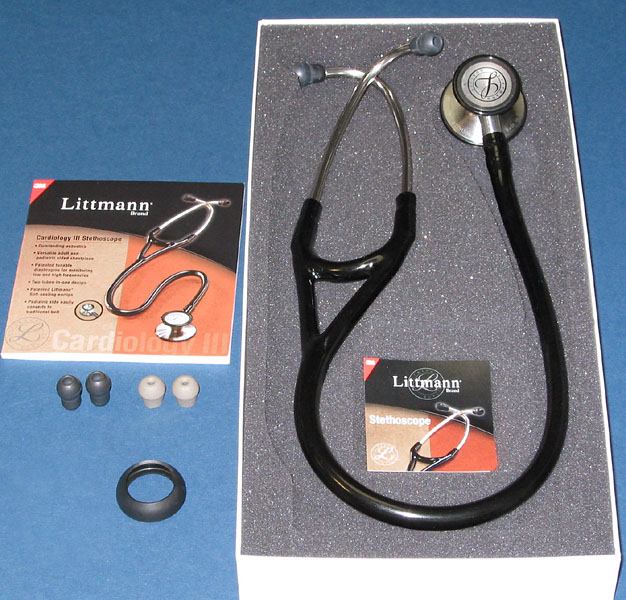
What is the BEST stethoscope?
http://www.forusdocs.com/reviews/Acoustic_Stethoscope_Review.htm
Nice review page, and you can read it all if you like. Meanwhile the final results (partially subjective) are:
Wow. The second favorite is the $20 scope. Really? At least the one I got is in the top 3 (Littmann Master Classic II). I will be looking at that Cardiology III, though. I am not in love with the Master Classic.
Nice review page, and you can read it all if you like. Meanwhile the final results (partially subjective) are:
| Model | Photo | Price | Score | Rating |
Littmann Cardiology III Best Stethoscope  |
 |
$160.00 | 32.9 | 1 |
Omron Sprague Rappaport
Best Buy |
 |
$19.00 | 30.7 | 2 |
Littmann Master Classic II |
 |
$87.95 | 29.5 | 3 |
| Littmann Cardiology I |
 |
Discontinued model | 29.3 | 4 |
Littmann Classic II SE
|
 |
$68.00 | 28.4 | 5 |
Welch Allyn Tycos Elite
 |
 |
$136.00 | 26.6 | 6 |
Prestige Sprague Rappaport Stealth |
 |
$26.50 | 23.9 | 7 |
ADC Platinum Cardiology 615 |
 |
$43.13 | 23.8 | 8 |
Single Head Nursing Stethoscope |
 |
$6.78 | 23.3 | 9 |
ADC Adscope Professional 603 |
 |
$38.99 | 21.8 | 10 |
|
AllHeart Cardiology
|
 |
$22.99 | 20.9 | 11 |
DRG Puretone Traditional PT3 |
 |
$79.98 | 17.3 | 12 |
Wow. The second favorite is the $20 scope. Really? At least the one I got is in the top 3 (Littmann Master Classic II). I will be looking at that Cardiology III, though. I am not in love with the Master Classic.
Wednesday, November 14, 2012
Paramedic School - Week 5
I have been very bad in posting about my experience. I will attempt to do better, but just getting through is all I can manage at times for now!
We blitzed through Introduction to EMS and Pathophysiology...the latter being still on my list of things to re-read. We are moving forward into airway management and patient assessment, with a bit of a back-slide for an evening of Acid-Base. Our instructor thought that we needed more time for that one (thankfully) so tomorrow night I can really try and wrap my head around things.
I am managing to maintain a decent average (around 93% at last glance) and it's been nice to have near real-time grading of assignments, quizzes, and exams. The instructors are good so far - some much better than others - but it's nice to have a mix of folks with different backgrounds.
My plan of spending this weekend in intubation training has been scratched -- I have to go to a funeral out of state instead. But I will pack my books along and do my best to getahead caught up in the reading.
Is there, like, a book on tape that I can just play over and over to drill this stuff into my mind? Making flash cards just seems like so last century...
We blitzed through Introduction to EMS and Pathophysiology...the latter being still on my list of things to re-read. We are moving forward into airway management and patient assessment, with a bit of a back-slide for an evening of Acid-Base. Our instructor thought that we needed more time for that one (thankfully) so tomorrow night I can really try and wrap my head around things.
I am managing to maintain a decent average (around 93% at last glance) and it's been nice to have near real-time grading of assignments, quizzes, and exams. The instructors are good so far - some much better than others - but it's nice to have a mix of folks with different backgrounds.
My plan of spending this weekend in intubation training has been scratched -- I have to go to a funeral out of state instead. But I will pack my books along and do my best to get
Is there, like, a book on tape that I can just play over and over to drill this stuff into my mind? Making flash cards just seems like so last century...
Thursday, October 25, 2012
Paramedic, in a nutshell
So it's taken me this long to get it straight in my own head, and read through all the documentation associated with our courses. Ten months of courses, followed by clinical/field.
UNIVERSITY
CLASS CREDIT
COURSE HOURS HOURS
A&P for Paramedic Practice 64 3
Introduction to Advanced Practice 64 3
Emergency Pharmacology 40 2
Patient Assessment & Airway Mgmt 64 3
Cardiology 112 4
EMS Operations 64 3
Trauma Management 64 3
Medical Emergencies 66 3
Special Populations 64 3
2243 Assessment Based Management 48 2
Clinical – I 250 2
Clinical -II (Field Internship) 250 2
1150 33
The A&P class is taken "on the side" throughout the rest of the courses. Ideally, we should use it should follow along with what we are doing in regular class. Meaning that we should be ahead on the A&P reading (I am as yet, not ahead in this reading). Speaking with one of the advisors, he said that in the past some people have left it for last. We cannot start clinicals until it's done, so they seriously crammed at the last minute. I get tachycardic just thinking about that (and getting through the rest of class will be much easier if A&P is done).
With classes on Tuesday and Thursday, I really cannot think about doing any “extra” reading between Monday and Thursday, so I guess A&P will live on the weekends. I’m attempting to be a better student – actually setting up a schedule for studying – but that’s a constant struggle for me with my ADD/procrastination learning style. I usually end up reading and doing quizzes on my breaks at work.
So, what does “Introduction to Advanced Practice” entail? So glad you asked. My life looks like this:
Class Topic(s)
1 Orientation and Course Overview
2 Being a Paramedic
3 Illness and Injury Prevention
4 Legal Issues and Ethics
5 Life Span Development
6 Pathophysiology 1 (Cells and Tissues, Role of Electrolytes, Acid-Base Balance)
7 Pathophysiology 2 (Genetics, Hypoperfusion, Types of Shock)
8 Pathophysiology 3 (Immune System, Inflammation, Stress and Disease)
That’s a ton of work. And about 300 dense pages of reading. In four weeks.
I can totally do this.
Wednesday, October 17, 2012
Phase 3 Clinical Trial - Mag Sulfate for stroke
http://www.fastmag.info/index.htm
This is the cool stuff I get to hear about in paramedic class. We have people all over the country (and a few outside) in our course, so they are practicing in very different environments.
Might be the next thing in stroke care.
Overview
The FAST-MAG Phase 3 trial is a multicenter, randomized, placebo-controlled, double-blind, parallel group trial of intravenous magnesium sulfate initiated by paramedics in the field within 2 hours of symptom onset in 1700 patients with acute stroke. The primary objective of the study is to evaluate the efficacy and safety of field-initiated magnesium sulfate in improving the long-term functional outcome of patients with acute stroke. Patients with acute stroke will be identified in the field by licensed paramedics who have received training in basic and advanced cardiac life support, stroke recognition, and specific procedures relevant to the proposed study. Physician-investigators will approve each patient for study entry after cellular phone contact with paramedics. Physician-investigators will also by phone elicit explicit informed consent to participate in the study, from patients when the subject is competent and from on scene legally authorized persons when the subject is not competent.
Paramedics will initiate a loading dose of 4 grams magnesium sulfate iv over 15 minutes or matched placebo, followed after hospital arrival by a maintenance infusion of 16 grams magnesium sulfate iv over 24 hours or matched placebo. Follow-up assessments will be performed at ED arrival, 24 hours, 48 hours, day 4, day 30, and day 90. The sites involved in the study will be EMS system rescue ambulances and receiving hospitals in Los Angeles and Orange Counties, California. The Clinical Coordinating Center and the Neuroimaging Analysis Center will be at UCLA Medical Center and the Data Management Center will be coordinated through Stanford University.
Study Hypotheses
The central aim of this study is to demonstrate that paramedic initiation of the neuroprotective agent magnesium sulfate in the field is an efficacious and safe treatment for acute stroke. The study design is a multicenter, randomized, double-blind, phase 3 clinical trial, using intention to treat analysis, of magnesium sulfate versus placebo among ambulance-transported patients with acute stroke, with study agent initiated in all individuals within two hours of stroke onset. Successful conduct of the trial will serve as a pivotal test of the promising neuroprotective agent magnesium sulfate in acute stroke, and will also demonstrate for the first time that field enrollment and treatment of acute stroke patients is a practical and feasible strategy for phase 3 stroke trials, permitting enrollment of greater numbers of patients in hyperacute time windows.
Primary Hypothesis:
Treatment with magnesium sulfate improves the long-term functional outcome of hyperacute stroke patients.
The primary study endpoint analyzed to test this hypothesis will be the difference in distribution of scores between magnesium sulfate and placebo groups on the modified Rankin Scale measure of global handicap, assessed 3 months poststroke.
Secondary Hypotheses:
Treatment with magnesium sulfate improves the long-term outcome of hyperacute stroke patients on measures of activities of daily living, neurologic deficit, quality of life, and mortality.
The secondary study endpoints analyzed to test these hypotheses will be the difference in distribution of scores between magnesium sulfate and placebo groups on the Barthel Activities of Daily Living Scale, the National Institute of Health Stroke Scale (neurologic deficit), the Stroke Impact Scale (stroke-specific quality of life), and in mortality, assessed 3 months poststroke.
Treatment with magnesium sulfate improves the long-term functional outcome of each of the following subgroups of hyperacute stroke patients:
Patients with ischemic stroke
Patients with intracerebral hemorrhage
Patients with ischemic stroke treated with conventional intravenous tissue plasminogen activator
Patients with ischemic stroke not treated with conventional intravenous tissue plasminogen activator
Patients with ischemic stroke treated within 60 minutes of onset
Patients with ischemic stroke treated within 61-120 minutes of onset
To test these hypotheses, the primary study endpoint, differences in the distribution of scores between magnesium sulfate and placebo groups on the modified Rankin Scale measure of global handicap, will be separately analyzed in each of these subgroups.
This is the cool stuff I get to hear about in paramedic class. We have people all over the country (and a few outside) in our course, so they are practicing in very different environments.
Might be the next thing in stroke care.
Overview
The FAST-MAG Phase 3 trial is a multicenter, randomized, placebo-controlled, double-blind, parallel group trial of intravenous magnesium sulfate initiated by paramedics in the field within 2 hours of symptom onset in 1700 patients with acute stroke. The primary objective of the study is to evaluate the efficacy and safety of field-initiated magnesium sulfate in improving the long-term functional outcome of patients with acute stroke. Patients with acute stroke will be identified in the field by licensed paramedics who have received training in basic and advanced cardiac life support, stroke recognition, and specific procedures relevant to the proposed study. Physician-investigators will approve each patient for study entry after cellular phone contact with paramedics. Physician-investigators will also by phone elicit explicit informed consent to participate in the study, from patients when the subject is competent and from on scene legally authorized persons when the subject is not competent.
Paramedics will initiate a loading dose of 4 grams magnesium sulfate iv over 15 minutes or matched placebo, followed after hospital arrival by a maintenance infusion of 16 grams magnesium sulfate iv over 24 hours or matched placebo. Follow-up assessments will be performed at ED arrival, 24 hours, 48 hours, day 4, day 30, and day 90. The sites involved in the study will be EMS system rescue ambulances and receiving hospitals in Los Angeles and Orange Counties, California. The Clinical Coordinating Center and the Neuroimaging Analysis Center will be at UCLA Medical Center and the Data Management Center will be coordinated through Stanford University.
Study Hypotheses
The central aim of this study is to demonstrate that paramedic initiation of the neuroprotective agent magnesium sulfate in the field is an efficacious and safe treatment for acute stroke. The study design is a multicenter, randomized, double-blind, phase 3 clinical trial, using intention to treat analysis, of magnesium sulfate versus placebo among ambulance-transported patients with acute stroke, with study agent initiated in all individuals within two hours of stroke onset. Successful conduct of the trial will serve as a pivotal test of the promising neuroprotective agent magnesium sulfate in acute stroke, and will also demonstrate for the first time that field enrollment and treatment of acute stroke patients is a practical and feasible strategy for phase 3 stroke trials, permitting enrollment of greater numbers of patients in hyperacute time windows.
Primary Hypothesis:
Treatment with magnesium sulfate improves the long-term functional outcome of hyperacute stroke patients.
The primary study endpoint analyzed to test this hypothesis will be the difference in distribution of scores between magnesium sulfate and placebo groups on the modified Rankin Scale measure of global handicap, assessed 3 months poststroke.
Secondary Hypotheses:
Treatment with magnesium sulfate improves the long-term outcome of hyperacute stroke patients on measures of activities of daily living, neurologic deficit, quality of life, and mortality.
The secondary study endpoints analyzed to test these hypotheses will be the difference in distribution of scores between magnesium sulfate and placebo groups on the Barthel Activities of Daily Living Scale, the National Institute of Health Stroke Scale (neurologic deficit), the Stroke Impact Scale (stroke-specific quality of life), and in mortality, assessed 3 months poststroke.
Treatment with magnesium sulfate improves the long-term functional outcome of each of the following subgroups of hyperacute stroke patients:
Patients with ischemic stroke
Patients with intracerebral hemorrhage
Patients with ischemic stroke treated with conventional intravenous tissue plasminogen activator
Patients with ischemic stroke not treated with conventional intravenous tissue plasminogen activator
Patients with ischemic stroke treated within 60 minutes of onset
Patients with ischemic stroke treated within 61-120 minutes of onset
To test these hypotheses, the primary study endpoint, differences in the distribution of scores between magnesium sulfate and placebo groups on the modified Rankin Scale measure of global handicap, will be separately analyzed in each of these subgroups.
Sunday, October 14, 2012
What have I gone and done? (or Paramedic class 1)
I'm a fairly busy person. Work close to full time. Master's degree seeking. Volunteer for EMS in local town. Volunteer for gov. doing EMS administrative stuff. EMT on call.
So why not add paramedic school to the mix?
I found a hybrid class - online "live" classes with a skills component where I will be flying to Massachusetts for skills training next year.
We had our first class on Thursday and I had my first (of what will likely be many) OMG-what-have-I-done? moments.
Well, maybe not my first. The first came when I signed the loan papers for the class. I will be paying this one off for 3 years.
Couldn't find a microphone with a mute button. Running around like a headless chicken for 30 minutes on that one. Got logged into the class web site. Over 40 people signed in. It's hard to tell the actual number since several people were logged in multiple times.
40, though. That's a lot of students.
I thought back to some other courses I've heard about - 50% or more don't finish. Yikes. I have to make it. I cannot fail this.
Some people were overly chatty - there's microphones, sure, but also a chat pane. This isn't twitter for chrissake! Some people would just not shut up. Having conversations while our instructor was talking, blah, blah, blah.
We went through the basics - introductions of the instructors, what is expected, how to access the online quizzes, assignments, and tests. The only pure moment of silence came when someone asked how much time outside of class would be needed to study. Brad (owner/instructor) pondered this for a minute and said, "probably 15 hours." SILENCE. It's about what I figured, but most people probably have been out of student mode so long they really didn't put much thought into it. Yep, folks. 2+ hours for every class hour.
I had forgotten the beginning of EMT class - it's all about EMS operations, ethics, and legal issues. Paramedic is no different. Not the most exciting stuff, but worthwhile. I've got to get back at it!
Here I go...
Saturday, October 6, 2012
one day down south
So I'm visiting my relatives in the southwestern US, enjoying the sun and 90+ degree heat while we get a sifting of snow back home. It's been a long time since I've been on what could be termed a vacation. Most of my vacations consist of driving to a relative's house to get some sort of work done. This one was really no exception.
Grandpa is not doing well. Dad needed help driving a truck and trailer south. Vacation it is.
Three days on the road with pops. Got to visit with my grandpa for a bit. Unloading the truck and trailer. Opening the house for the winter.
Today is my day. I have done nothing but sleep in, eat, play in the pool, play on the computer.
Back to work and reality tomorrow -- a ridiculously hectic week assisting with a conference. It will be 16+ hour days and little sleep. Paramedic school starts on Thursday.
But today is mine.
Grandpa is not doing well. Dad needed help driving a truck and trailer south. Vacation it is.
Three days on the road with pops. Got to visit with my grandpa for a bit. Unloading the truck and trailer. Opening the house for the winter.
Today is my day. I have done nothing but sleep in, eat, play in the pool, play on the computer.
Back to work and reality tomorrow -- a ridiculously hectic week assisting with a conference. It will be 16+ hour days and little sleep. Paramedic school starts on Thursday.
But today is mine.
Subscribe to:
Posts (Atom)